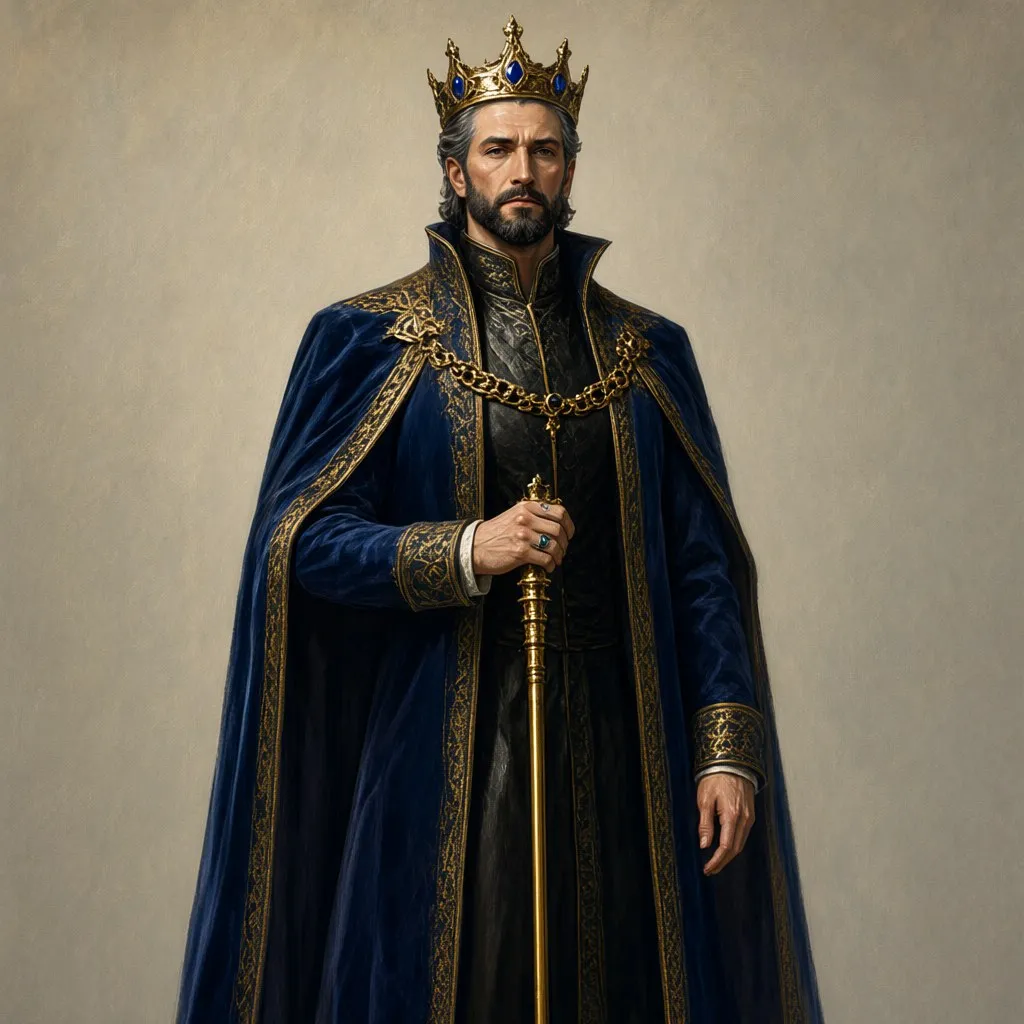
The Supreme Ruler
The ruler who renounced his daughter
The Supreme Ruler sat the one throne to which the guilds of Ashkar bound themselves in the Concord, and the record never gives his name. He was born when no power could hold the realm together, and his mother meant him as the answer to that. The Archive records her only by a name.
He was a tall, still man with warm hands, dark hair going grey at the temples, and the smell of cedar oil and old parchment about him. In council he asked questions rather than raising his voice, and when he was truly angry his voice grew quieter. His private rooms were plainer than the realm would have believed. He was terrible at rowing and at dancing, and never good at chess, and never accepted it. Many in Ashkar called him cruel. He was not. He tried, every day of his reign, to be a good ruler, and some of his choices were not the best ones.
He married the Phoenix Queen’s younger sister, who married him for love over her sister’s objection, and he made the queen his oldest ally. He sent the Justicar’s Legion to end the civil war in Iskandar and refused her demand that both sides be destroyed, and the Shadow Weavers came deeper into his confidence. When he ended the Gilded Coven’s expansion by decree, the Coven turned on him with pamphlets and then with killers, and he never understood why death seemed so reluctant to take him.
His wife died the spring after their daughter Zarina was born. He doubled the guard and had her food tasted, raised her with his old friend Balif, and loved her past all reason. Every precaution was love, and he did not see that it was also a cage. When she gave herself to the Velvet Veil he tried agreements, then asking instead of forbidding, and refused the Phoenix Queen’s demand to burn the Veil out. He defended her far longer than was wise. When her own act cost a man his life and the council demanded a reckoning, he renounced her before the Hall of Concord, stripped her of her titles, her inheritance and her place in his house, and would not go after her. It broke him more than he ever let anyone see.
He wrote the decree in his own hand, and sat beneath it while it was read, because he would not make another man stand alone under it. It did not call her anything at all. Her name he left her, because it was the one thing in his house she had ever said was hers.
Appears in
- The Civil War in Iskandar Three centuries of silence end on the morning the western tax road falls, and a court built to intimidate discovers it is surrounded.
- The Golden Daughter The most powerful man in Ashkar loves his daughter without limit, and builds her, one reasonable precaution at a time, the cage she will spend the rest of her life trying to leave.
- Behind the Velvet Curtain The Supreme Ruler's daughter walks out of her father's palace under a name she invents, and finds a freedom that feels, for one bright year, like the first true thing anyone has ever offered her.
- The Daughter Renounced The morning after the square the Supreme Ruler's daughter stops hiding, and the Velvet Veil makes her its emblem; her father defends her long past sense, until the one person in Ashkar he never locked a door against carries his council's order across the river.
- The Gilded Expansion The maps of western Ashkar simply end in green, so a man with a brass ruler draws a line through the painted forest, and the realm discovers that the land already knew where it began.
- The Throne and the Ledger Twenty-eight million crowns die with a single decree, and the men who cannot buy the decision back spend years discovering that a ruler who will not be bribed is also a ruler who will not be quietly killed.