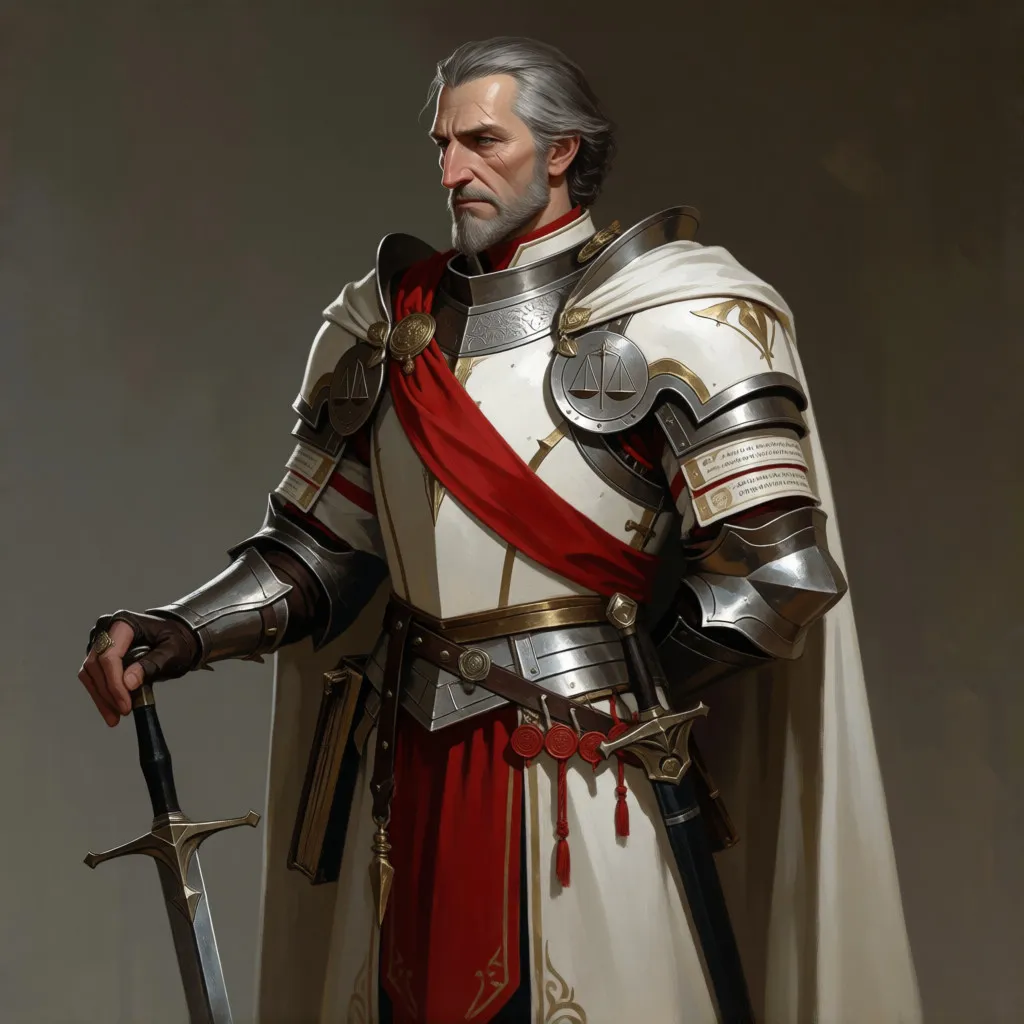
Lord Marshal Caedmon Vale commanded the Justicar’s Legion through the intervention that ended the civil war in Iskandar, and through the occupation that followed it. He was iron-grey and weathered by campaigns fought across Ashkar, and he wore a red judicial sash over white armour and no helmet before the throne.
He arrived carrying a decree that named no rightful victor. It recognised neither the separatist council nor the absolute claims of the Veinwright throne, and it required three things: an end to necromancy, the disarmament of unlawful forces, and the protection of civilians. To a country that had endured years of war it sounded like salvation. He rode beneath the palace walls through falling flowers, looked up at the balconies, and saw hope in the faces there. He also saw fear. At that distance the two look much alike.
He was scrupulous, and the scruple was the difficulty. He told Varyon that the Legion had defeated an unlawful army — not the rebels, an unlawful army — and the king noticed that the distinction was deliberate. Surviving separatists stayed in Legion custody to be judged as individuals rather than handed back. When Ysara accused him of granting the invaders trials while the Veinwright dead went unavenged, he answered that the dead do not require vengeance and the living require justice, and she told him that was easily said by a man whose family had not been burned in its tombs.
What he required of the throne was close to everything: every royal record touching necromancy, custody of every field priest, the disarmament of any formation suspected of using the dead, and Legion authority over the fortresses and the burial grounds. Temporary, he said, until Iskandar was secure. He would not say who was feeding him intelligence, only that sources are protected for good reason. The meeting ended with every courtesy preserved, and neither man believed peace had been reached.
He was not blind to what he had walked into. Pressed to distinguish Veinwright tradition from the horrors committed in its name, he said that on entering Iskandar the Legion had found children hiding in cellars from rebel raiders and loyalist prisoners nailed to trees — and also emptied graves, bodies bound into walls, and dead men standing guard over rooms of civilians held for later use. Then he said there was a distinction, and asked the king to help him find it. He allowed that the Gilded Coven might have manipulated the war, that the Shadow Weavers might have concealed truths, that the separatists might have done worse than the reports admitted. Told to investigate them, he said he would.
He led the march on Greywatch himself, and refused the loyalist troops Varyon offered him.
He is the man who stood where Veinwright kings had announced their coronations and read out that the rebellion was defeated, the necromancy contained, the roads and courts and granaries restored to lawful administration — and that the intervention of the Justicar’s Legion was therefore declared a success. A few Legion officers struck their fists against their breastplates. Nobody else made a sound.
Every word of it was true. He said it in a square of ruined homes, emptied prisons, sealed crypts, and streets patrolled by foreign soldiers.
Appears in
- The Civil War in Iskandar Three centuries of silence end on the morning the western tax road falls, and a court built to intimidate discovers it is surrounded.
- The Shadow Conspiracy A contract is refused in a gilded room and a second one is agreed, and a kingdom that has not yet heard of either is already being sold.