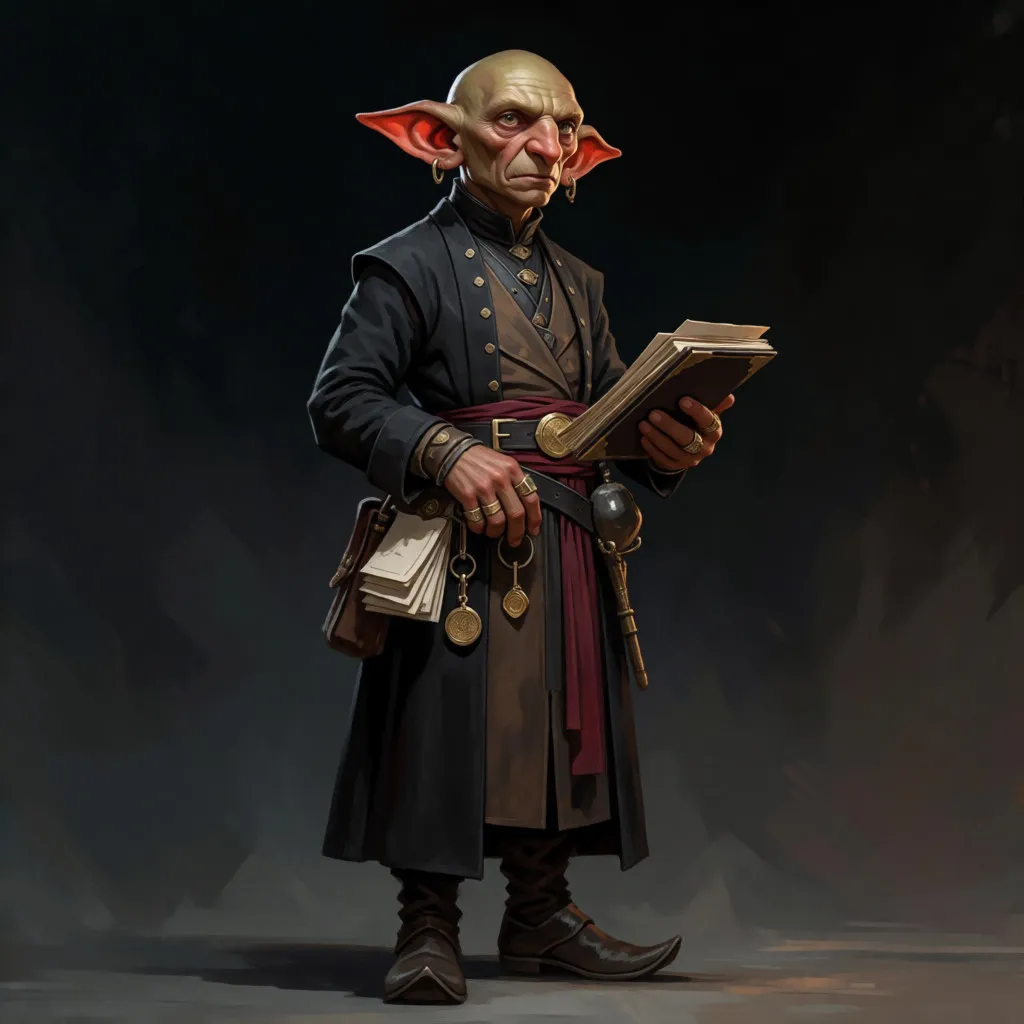
Talren was secretary to Master Corven at the Gilded Embassy in Iskandar, which meant he was present for the whole of the conspiracy and was never once asked to approve of it.
He was short and copper-skinned, a goblin who wore gold at his ears and on his fingers and carried his ledgers against his chest the way other men carry authority. He did not sit in Corven’s presence without being invited. Almost nobody did.
He was in the room on the first morning, when the lamps bent toward the eastern wall and a Shadow Weaver stood where a moment earlier there had been no one. He drew a knife, which was brave and useless, and he did not put it away for a long time. When his master ordered him out, it was the intruder who said that dismissing a witness would look like guilt, and so he stayed and heard the arrangement made.
What he did that day was ask the questions nobody wanted answered. Whether the Weavers could be trusted — you should not, he was told, with something like approval. What the arrangement would cost. He was told he would never know, and that this was the ordinary condition of such arrangements, and he could not find the argument against it.
“My duty is not to object,” he said, when Corven asked whether he objected.
“That was not my question.”
He objected. It changed nothing. He stayed.
For four years he was the man who carried the thing rather than the man who chose it. He stood holding an empty ledger while seven commercial houses were frightened and then shown a list of estates that might change hands. He brought in the sealed message ordering the Justicar’s Legion to prepare, and his face was pale before the seal was broken. He rode to the ruined tollhouse outside Halren with six hired swords and lowered his eyes while a former captain of the king’s army told his master not to speak of suffering as though he had discovered it.
He also brought Corven the two maps: the same northern road drawn twice, one copy ending at a Legion detachment. That is how the Coven learned its partner had begun sorting the survivors by what they knew. Nobody had asked him to notice it. He noticed it and carried it upstairs, which was the most dangerous thing he ever did.
At the end he was asked what could be done for a woman the Coven had used as a witness and then ruined by entirely ordinary means. He took a day and a half, established that nothing could, and explained that a payment to someone who cannot be found sits in the books as an unmatched liability which the auditors will query every year.
He was told to enter it regardless. He entered it, and he answered for it annually, and to the end of his life he was the only person in that building who could say exactly what the war had cost, to the coin, in a column that never balanced.