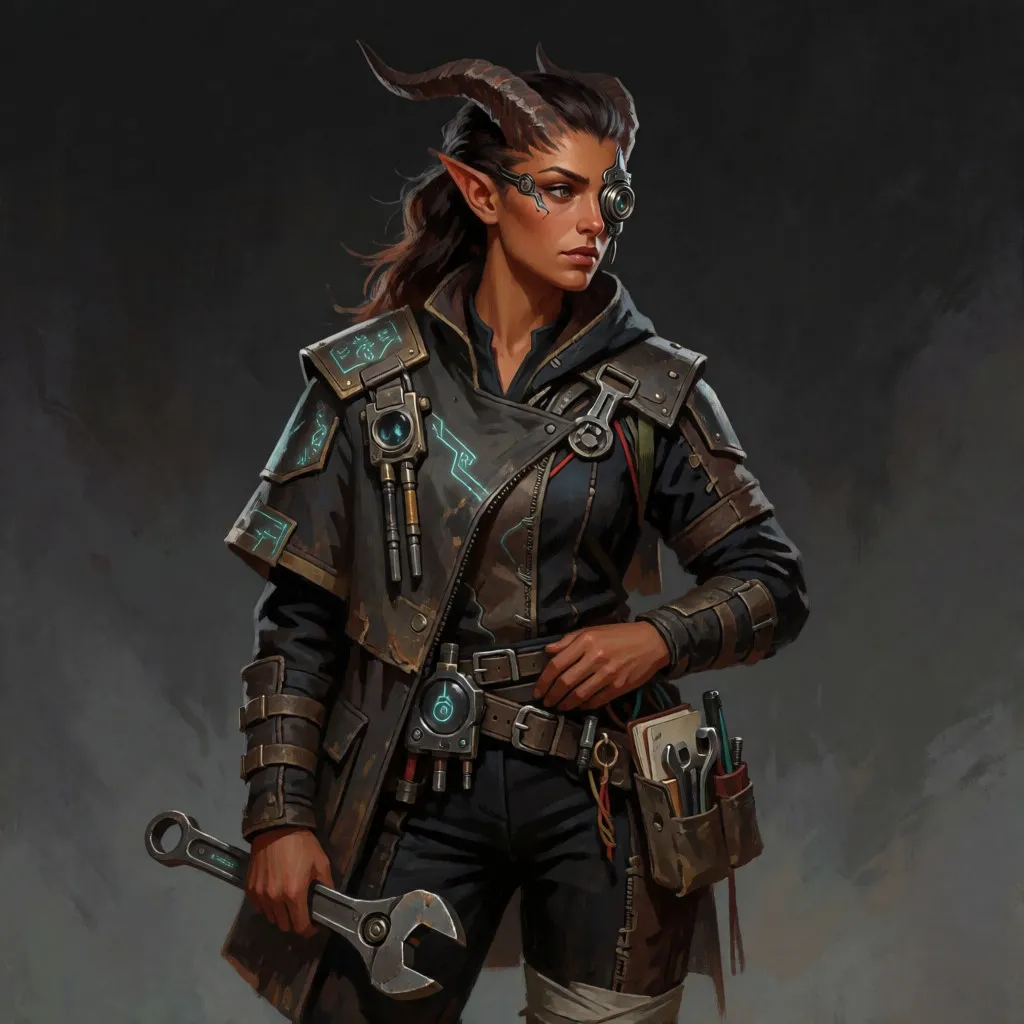
Sela Venn spent the Gilded Expansion as the only person willing to say the obvious thing to Tovan Rheel, and the years afterward making certain the Gilded Coven could not pretend the obvious thing had never happened.
She arrived west eating roasted nuts bought from a roadside merchant thirty miles back, telling her chief engineer that a west-hauler running hot since Veyra was not going to explode because a child waved at it. When the survey compasses all came back pointing at the floor, she was the one who said out loud that north was apparently underground, and then asked what they were going to do about it.
She was short, dark-skinned and horned, two ridged sweeps of bone curving back from her temples with her ears coming to a point beneath them, and she drew stares along every road the expansion marched down. She had stopped noticing them years before it started. What she could not stop noticing was that the people who stared at her in the east were the same people who, in the end, decided what her guild was owed.
Her value was that she would not let a technical problem stay technical. Handed a schedule of fourteen-hour rotations, she slapped her hand over the page before Tovan could start calculating the point at which crews begin making mistakes, and told him that what he needed to know was that they already would. Standing beside the road while the morrahn herds came out of Oruun Hollow, she asked him whether four hours had really been the best he had.
She held a dying goblin rigger at Thalenor Root while he asked whether his brother had got out, and told him yes. His brother had died near the first drill.
What she became afterwards was an accountant, which she had always hated. In the demobilization camps she watched a clerk explain to a woman named Rana Kel that two crushed fingers required further verification, and started collecting paper. Three notebooks became six, then boxes: contracts compared against payroll slips, duplicated deductions, unexplained penalties, sites recorded as voluntarily abandoned where crews had in fact fled an attack.
Asked what happened when she finished, she said that then they would know exactly what they were owed.
“Nothing was complicated when you needed something built. Now people want the money they were promised, and suddenly nobody can understand a contract without three lawyers.”