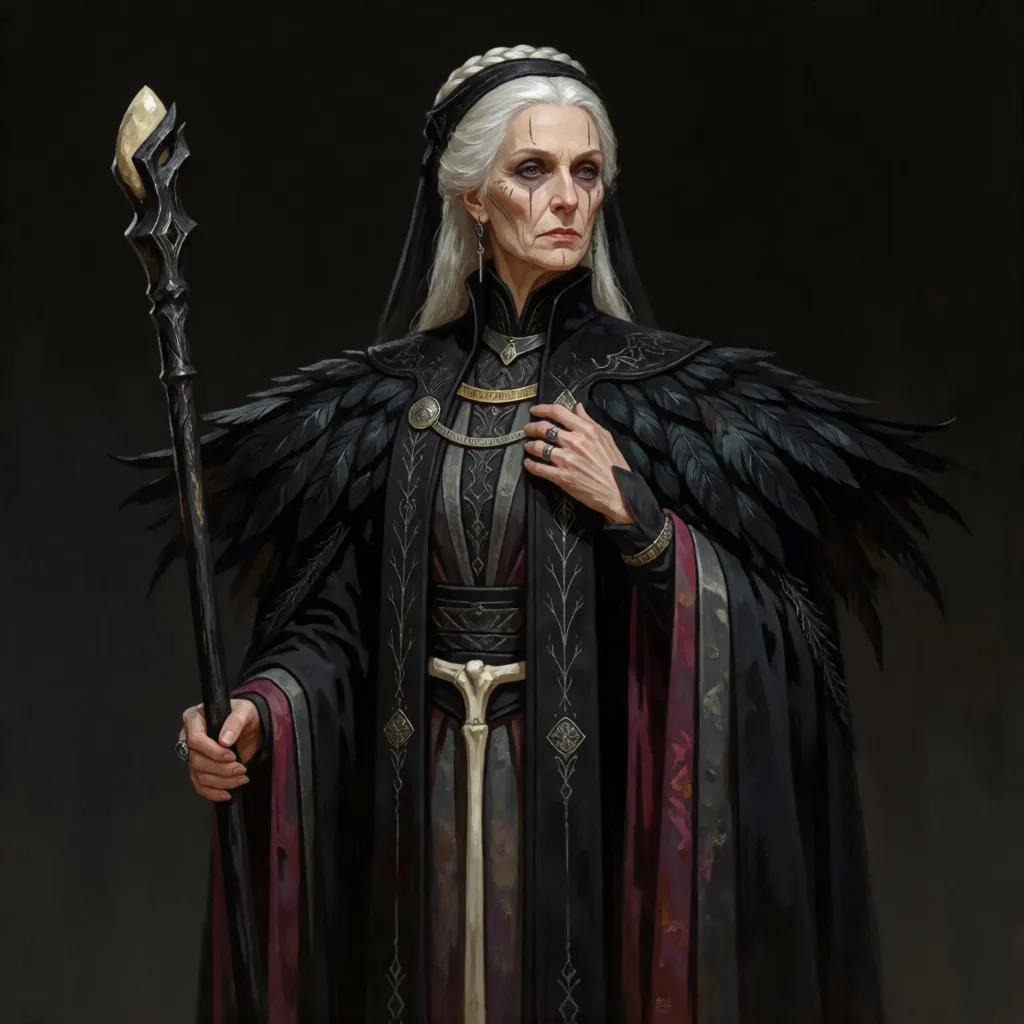
Queen-Regent Ysara was King Varyon’s aunt and the oldest living member of the Veinwright line. Age had reduced her body and not her presence. She wore the dark eye-markings of the kingdom’s highest occult priests, and for the whole of the war that ended the dynasty she sat beside the throne rather than on it.
She was the steadiest voice at that court for doing the opposite of whatever the king had decided. Told that the provinces were saying the dead served the throne more faithfully than the living, she answered that they should, because the dead do not rebel. Asked what would follow if executing a hundred rebels raised ten thousand more, she said the crown would at least learn where the disloyal lived. When captured rebels were brought before the court, she wanted them executed that day.
She was not simply the cruellest person in the room. She was also, repeatedly, the one who saw what was coming. She told Varyon that the rebels wanted the Veinwrights gone rather than reformed, that revolutions do not end with the promises that begin them, and that confessing would earn him nothing. He had heard the same reports out of the west, and could not tell her she was wrong.
As the war turned, the old Veinwright houses gathered around her and began calling themselves loyalists — the ones, they said, with the courage to preserve the kingdom. She met her nephew’s admissions of guilt with something colder than anger. Guilt, she told him, belongs to those who lose. When Elianor answered that this belief was why the kingdom was dying, Ysara replied that the kingdom was dying because people like Elianor had taught the king to doubt his right to rule.
She opposed opening the eastern gates and was overruled, and afterwards watched a tribunal take up the invaders’ grievances while the Veinwright dead went unavenged. She said so, to the Lord Marshal’s face.
She was charged with conspiracy and obstruction, and never tried. She went north with the refugees toward the frozen lands of the Crystalline Conclave, and the north refused to give her up. She made that journey without the black feathers and the royal jewels, in a plain cart, beside children whose parents had gone into Justicar prisons.
She spent the war insisting the kingdom would not survive its own mercy. She left it in a cart, among children the victory had orphaned.