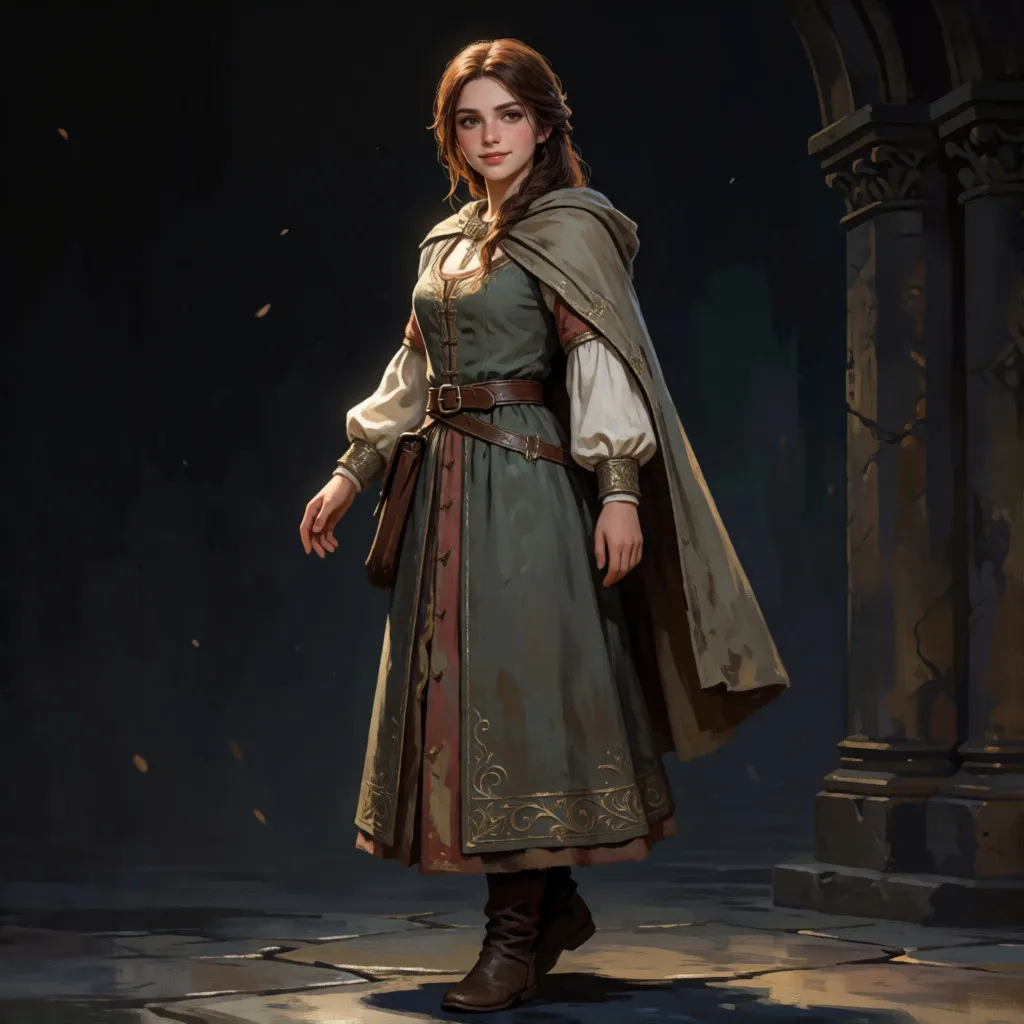
Mira Saren
The friend Zarina helped, and lost by helping
Mira Saren was the daughter of a minor official at the Supreme Ruler’s court, and for most of Zarina’s childhood she was the only person in the palace who wanted nothing from her.
She had no interest in politics and understood almost nothing about guild disputes, which was precisely what Zarina liked about her. She talked instead about her cousin’s engagement, her brother’s opinion of her cousin’s engagement, and a man at her father’s office who had begun wearing a hat indoors and whom the entire household had agreed to say nothing to, on the grounds that watching him was more entertaining. She teased flatly and without cruelty, in escalating series — asked why a report could not wait, she wanted to know whether Zarina would be imprisoned for not reading it, then executed, then exiled. She was the one who turned up with two riding cloaks on an afternoon Zarina had forgotten, and who, when asked whether she was starting a clothing business, said yes. When Zarina chose the report for the third week running she did not get angry. She was disappointed instead, which was worse, and left.
Eleven days later she came back, stood in the doorway with the same two cloaks and said she was not asking, she was collecting. They rode the north fields badly. Mira’s mare bit her sleeve twice and she declined to accept this as affection, calling it a review. It was the last uncomplicated afternoon either of them had, and Zarina promised herself she would go every week, and then the road levy came in and she did not.
Mira was removed from the capital without anybody thinking to mention it. Her father lost an administrative post after a dispute over provincial contracts: nothing criminal, nothing dramatic, simply a man who had fallen out of favour with three officials who outranked him. The family went back to their country estate while the matter was reviewed. Zarina found out from her attendant four days late and established the whole of it in under half an hour — which was what made her angriest, because it had never been hidden. Her letter arrived three days after that, and the only line of it Zarina kept reading was at the bottom: I thought someone would tell you.
She came back to the capital for four days the following spring, and the conversation would not start properly. There were pauses that had never been there before. Told that Zarina now reported rather than talked, and asked what had happened to her, Zarina said she was fine, and Mira said all right, and that answer hurt more than an argument. But it was Mira who stopped by the garden gate when festival music came over the wall from the west quarter and said they could go — and Mira who, two nights later, swore at Zarina for turning up on her doorstep without guards, went inside, and came back out with a cloak, observing that if they died she was going to be extremely angry.
She paid for the pastry Zarina walked off with, having never in her life bought food, and told her she was useless, and that having never bought food was worse. She lost eleven coppers of her own money to a weighted ring game and had to physically prevent Zarina from taking the matter up with the man running it. She spent too much on a painted bracelet because she liked it, and Zarina stole it off the breakfast table the next morning and refused to give it back, and Mira let her, because it was eleven coppers and because it was funny.
What ended it was kindness. Zarina asked her father to restore Saren to his post so that Mira could stay, and he did it warmly and in front of the council, and Saren refused it: a man given his office back by the ruler’s daughter does not have an office, he has a debt, and every order he signs will be read as hers. He took a smaller posting in the eastern provinces instead. Mira dressed carefully to come and say thank you, which was the first thing Zarina noticed and the worst, and told her that her father had sat down on the stairs and cried, and that there was no small size available to her, and that they were leaving anyway — further, and for longer, and this time because of her. At the door she stopped and said that the festival had been the best night she had had in four years, and that she would do it again, and that she wanted that said before she went so Zarina would not decide afterwards that the whole of it had been a mistake.
The family left in the fourth week of spring. Zarina did not go down to the courtyard, because a princess seeing them off would have been one more thing done to them, and watched the carts from an eastern window instead. That night the stolen bracelet went into the locked drawer beside the letter.