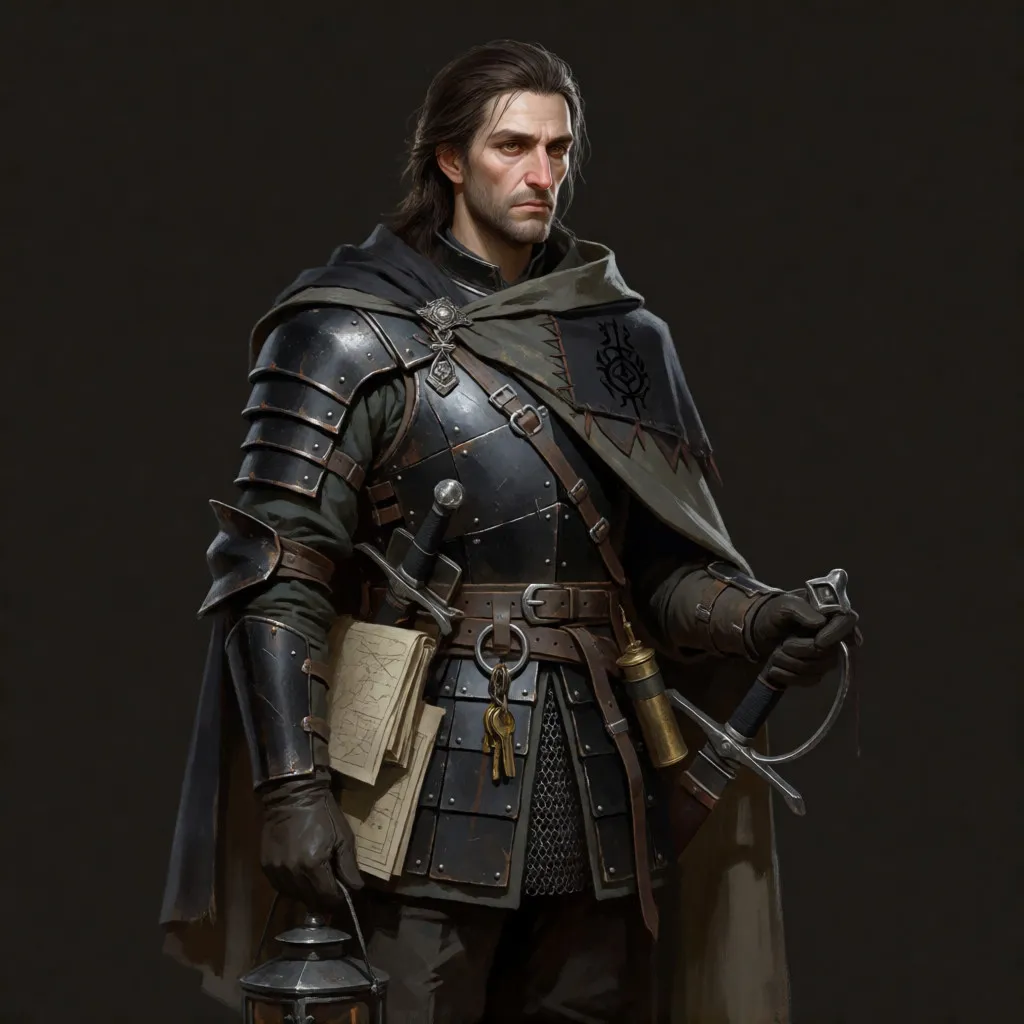
Avel Teren commanded Greywatch Keep, which guarded the eastern road into the heart of Iskandar. Behind him lay three farming provinces, two royal armouries, and the shortest march to the palace. He was a garrison officer rather than a courtier, and the most consequential decision of the civil war was taken by him, alone, at the end of a winter.
His garrison had numbered eight hundred. By the start of that winter it was under three hundred, the rest lost to skirmishes, desertion and fever, and buried too shallowly outside the walls because the ground had gone hard with the cold.
The separatists never assaulted Greywatch. They cut the supply roads, poisoned the wells, and waited, on the correct understanding that hunger would open the gates for them. Teren walked the battlements each morning and counted their fires. There were more every day.
On the thirty-second day of the siege his soldiers killed the last horse. On the thirty-fifth they boiled shield leather. On the thirty-eighth a rebel messenger came up under a white flag and offered honourable surrender: the common soldiers to go home, the officers to be detained and tried for having supported the throne.
Teren received him outside the gates and declined.
“Then you are not offering surrender,” he said. “You are offering a slower execution.”
King Varyon had forbidden the raising of the dead. Teren knew it. But the king was a long way off and the rebels were at the wall, and High Mortarch Selkos had taken care to send one of his disciples into the keep weeks before the siege closed around it.
What Teren asked the priest were the questions of a professional soldier. How long they could stand. Whether they could hold shields. Whether they could use spears.
Whether they remembered.
Then he closed his eyes, and opened them, and said: do it.
Thirty-seven men were raised beneath the chapel. They held the eastern wall in the attack before sunrise, and afterwards he had them returned below before the enemy could see them clearly. His own soldiers had seen enough. Some knelt as the corpses passed, believing a miracle had saved them. One wept, having recognised his brother.
The dispatch that went to the capital described a heroic defence against overwhelming numbers, praised the commander and his garrison, and requested immediate supplies.
He avoided the chapel after that. He told himself the keep protected the eastern provinces. He told himself the dead felt nothing. He told himself he had ordered only the first thirty-seven. Every one of those statements was true, and together they were a lie, and he was not a stupid enough man to be spared knowing it.
He tried to hold the line he had drawn exactly once. When the priest began taking bodies from the field — I forbade it, he said, and was told you permitted survival — he drew his sword on him.
A dead loyalist sergeant came up the stairs and took him from behind. The man’s jaw had come loose and one arm no longer worked, and years earlier he had saved Teren’s life. The priest took the commander’s sword out of his hand and told him he should be proud, that Greywatch would never fall.
It never did. The next time his soldiers saw him, he was standing among the dead, and when word of it reached the capital the survivor who carried it wept while he spoke: we thought they were protecting us.