Veyra
The friend who never said stop
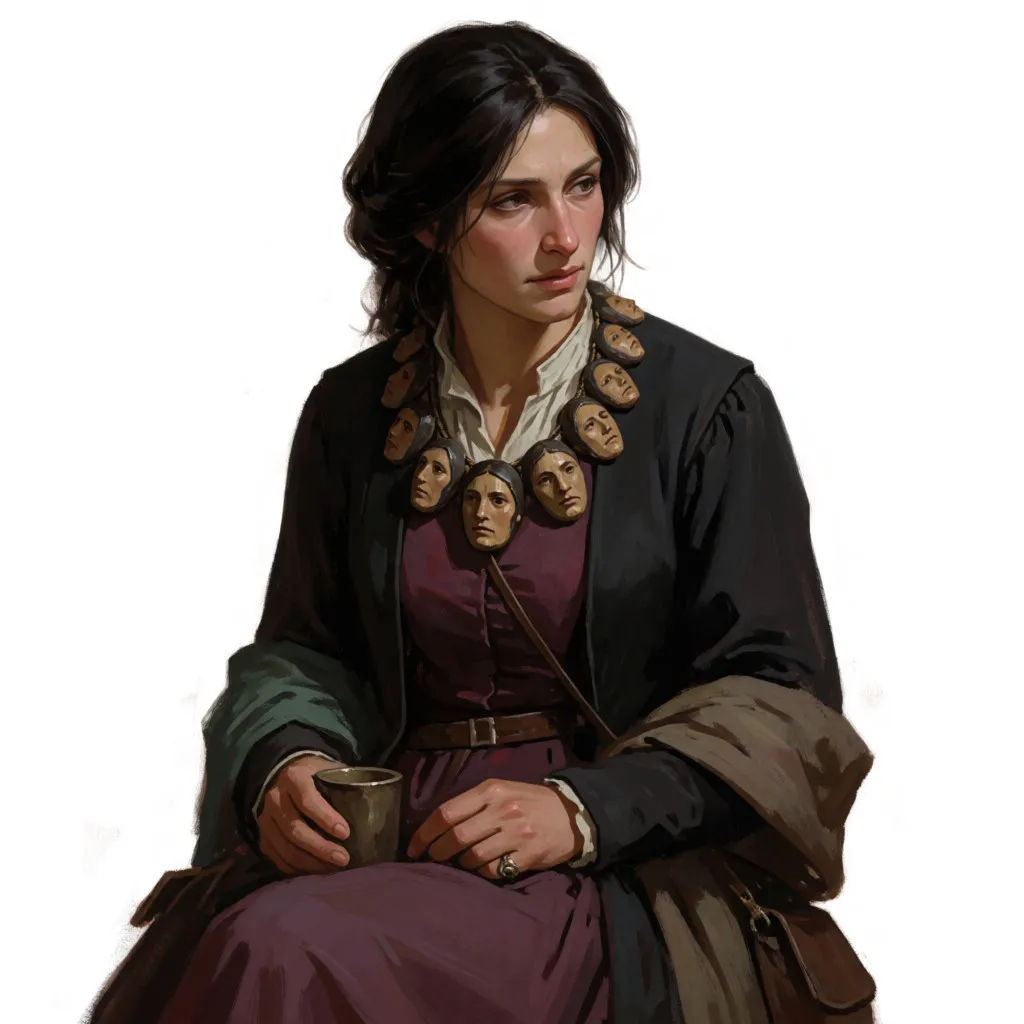
Veyra was about thirty and dressed as plainly as a clerk, except for an enormous necklace of little painted wooden faces that clicked together when she moved. Her brother made them; several were crooked, and she told him so often. She was one of the regulars of the Red House and of the theatres the Velvet Veil kept going, found in the wings with papers under her arm, and she lived in two low rooms over a chandler’s yard by the western canal, where the light came in green off the water.
She was the least consoling person in the Veil and the most honest. She would not take a side against a father she had never met. She turned down vials for no reason except that she did not feel like it. Her one rule was never to judge anyone, and she kept it absolutely — which made her, for a young woman who needed somebody to say stop, the most dangerous kindness in the city.
It was Veyra who told Zarina, calling herself Sera, to take half the first time, because she had never had it. It was Veyra who, asked on a frosted roof whether Sera ought to stop, said that if you had to ask five people whether to do a thing, you probably did not want to yet. She meant it kindly. Then, at the palace theatre, she recognised the Supreme Ruler’s daughter in the line of the company and said nothing to anyone, and gave her the one friendship in the city where nothing had to be steered round — and liked, a little too much, being the only one who knew.
After the renunciation it was Veyra who found her the room at the top of the blue house, with the window that stuck, and Veyra who noticed, before Zarina did, that she had begun telling the story of her own bow the same way every time, and said so once, and never again.
She never once asked Zarina whether she was all right. She loved her, in her way, and that was the whole of the trouble.
Appears in
- Behind the Velvet Curtain The Supreme Ruler's daughter walks out of her father's palace under a name she invents, and finds a freedom that feels, for one bright year, like the first true thing anyone has ever offered her.
- The Daughter Renounced The morning after the square the Supreme Ruler's daughter stops hiding, and the Velvet Veil makes her its emblem; her father defends her long past sense, until the one person in Ashkar he never locked a door against carries his council's order across the river.